
Most undercarriage failures don't happen without warning. They happen because a tension spring gave way long before anyone noticed.
A track tension spring is under constant stress. Every compression cycle wears it down. Every bump, every heavy load, every hour of operation adds to the fatigue. And because it's hidden inside the track frame, you can't see the damage building up.
But here's what you need to know: fatigue cracks grow from the inside out. One study on coil springs found that when a spring is under cyclic loading, micro-cracks form deep within the material and propagate outward over time. That means by the time you see a crack on the surface, the spring is already close to failure.
The problem is made worse by eccentric loading—vertical forces that cause buckling deformation of the spring, creating uneven stress points. That's why two springs on the same machine can have completely different fatigue lives.
Enter Ultrasonic Testing
Ultrasonic testing is the solution that most operators overlook. Unlike visual inspection or magnetic particle testing, which only find surface defects, ultrasonic technology can detect internal cracks before they become visible.
Research has demonstrated that nonlinear ultrasonic testing can detect fatigue damage in springs long before failure occurs. The principle is simple: ultrasonic waves change as they pass through damaged material. By measuring these changes, inspectors can determine how much fatigue damage has accumulated inside the spring.
The numbers tell the story. In one study on coil spring fatigue, the ultrasonic nonlinearity parameter showed little change during the first 1.5 million cycles, then increased sharply between 1.5 and 3 million cycles—indicating rapid internal damage accumulation. By the time visible cracks appeared, the spring was already beyond safe operation.
Why This Matters for Your Equipment
The industry standard for heavy equipment springs is a fatigue life of 3 million cycles before failure. But actual service life depends on countless variables: load conditions, ground terrain, maintenance history, even weather.
Ultrasonic testing gives you a way to know where your springs really stand. It's non-destructive. It's quick. It costs about one-twentieth of what you'd pay for a new spring. And it gives you data, not guesswork.
Don't wait for the break. Don't listen for the squeak. Don't rely on visual inspection alone. Ultrasonic testing finds the cracks before they find you.
Key Takeaway
A track tension spring doesn't announce its failure in advance. It just breaks. But with ultrasonic inspection every 2,000 hours, you can catch fatigue damage early and replace springs on your schedule—not the machine's schedule.
Summer Heat and Tire Blowouts — Why Cooling Matters More Than Pressure
308View · 2026-09-22
Dust Is Your Excavator Engine's Worst Summer Enemy
459View · 2026-08-26
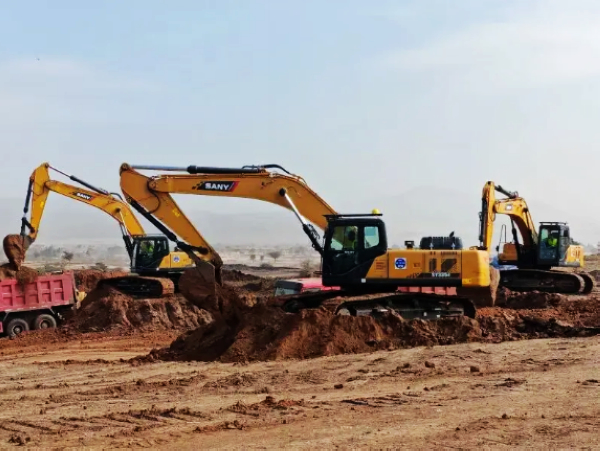
SANY Supports Africa’s Largest Airport Project in Ethiopia
2014View · 2026-04-21
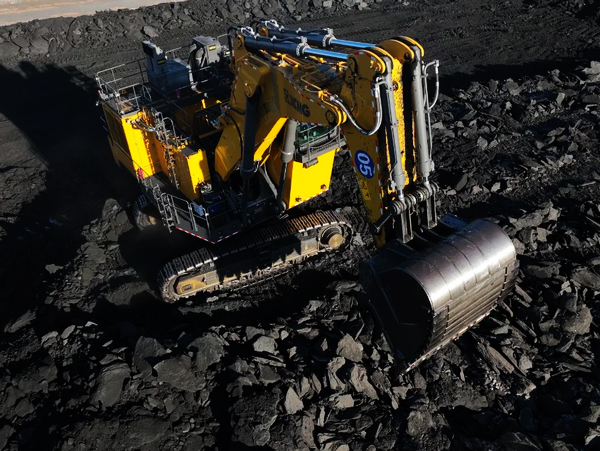
XCMG XE2000 Excavator Achieves 7,500 Annual Operating Hours
1590View · 2026-03-20

XCMG XGH5251TCXZ6 Snow Removal Truck Safeguards Winter Mobility
929View · 2026-02-27

BYD Launches World’s First Mass-Produced Sodium-Ion Forklift
2710View · 2026-01-21

ZOOMLION Crane Technology Powering Reliable Lifting on Construction Sites
1276View · 2025-12-25

SUNWARD SWDE165B Heads to North America
1118View · 2025-11-24
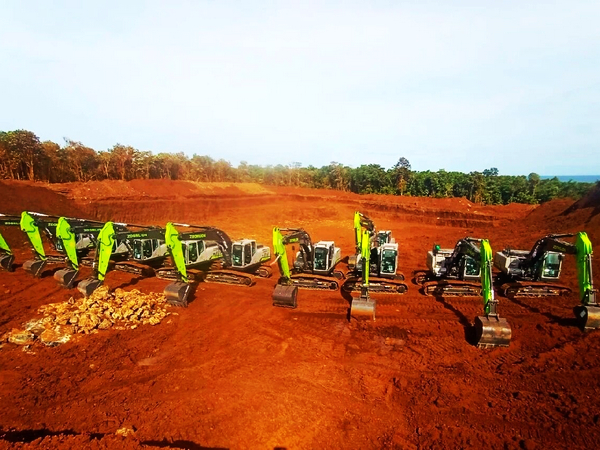
ZOOMLION Excavators Power Philippine Mining Project
1363View · 2025-09-22
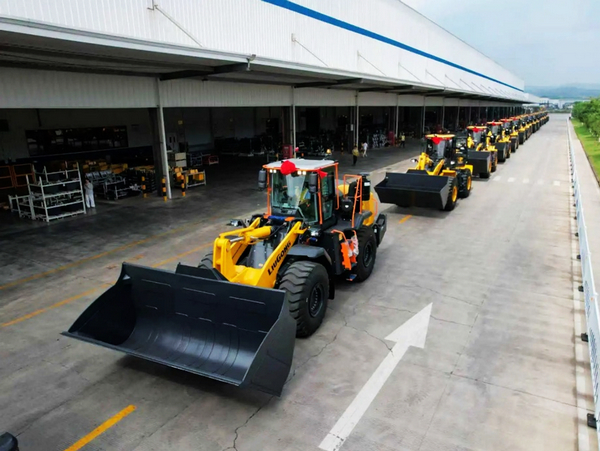
LIUGONG Mid-to-Large Loaders Delivered in Batches
1619View · 2025-08-18
2026-09-18
2026-09-04
2026-07-08
2026-06-18
2026-06-09
2026-04-30
2026-08-20
2026-08-20
2026-08-15
2026-08-14
2026-08-08
2026-07-31
+86-731-8512-4418
+86-731-8512-4418
+86-136-6162-6401
+86-159-2141-2075
Suite 35018, Tower T3, CFC Fuxing World Financial Center, No. 303, Section 1, Furong Middle Road, Kaifu District, Changsha, Hunan Province, China